
Judging Intentions
The average viewer of the opening ceremony wouldn’t have a clue who Bacchus was.

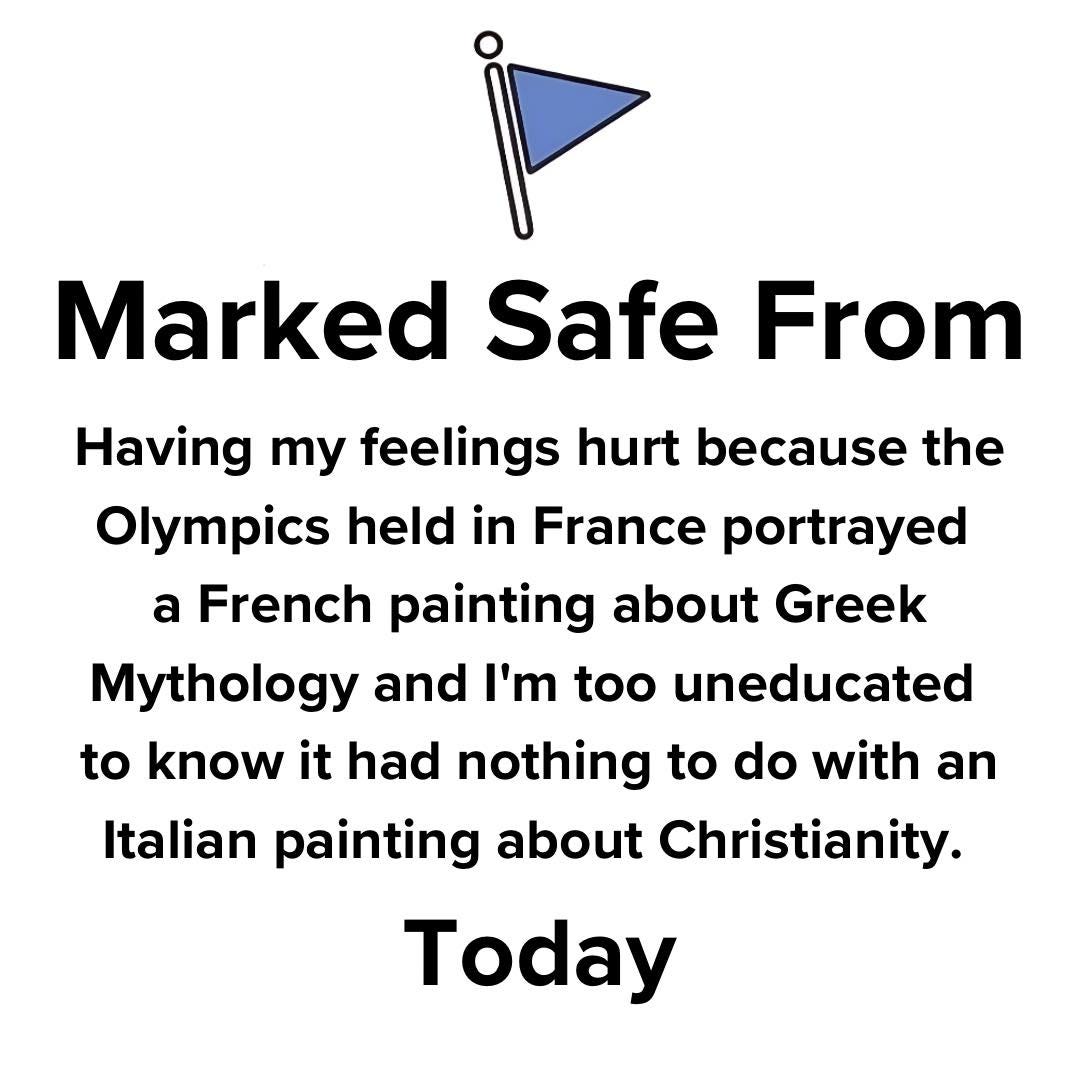
Further to my post yesterday on the Paris Olympics’ opening ceremony, I wanted to share a quick thought that was sparked by an online conversation that I had today with a friend who used to be in pastoral ministry but has since abandoned Christianity. The meme that he shared insults those of us who hold to the faith he has left behind, thinking that we uneducated Christians have overreacted to the perversion of Da Vinci’s Last Supper. The ceremony was not mocking Christianity, but was instead making a social statement about unity using Dionysius/Bacchus as some kind of example.
This, of course, made me think through what I had posted yesterday. There I suggested that the blasphemy against God was not just in the desecration of the Lord’s Table, but the also in desecration of Beauty. Drawing from the transcendentals and their relation to reality, and ultimately to God, I argued that the blasphemy went much deeper than most had realised.
Was I wrong? Was the opening ceremony really about ancient Greek paganism? Did the billions of Christians (and even non-Christians) around the world take offence for nothing, and now we’ve got collective egg on our faces?
I found help to these questions from another Facebook post, this one by Dr. Brian Kemple, the founder and director of the Lyceum Institute. Kemple studied semiotics (how languages work) under the important late philosopher John Deely. Drawing from semiotics, Kemple had a unique take on the controversy:
I cannot speak for the intent of the organizers. But I can say that we are never morally inculpable for stipulating a sign without being aware of customary usages.
This helped me frame my response to my friend. Even if those involved in the controversial opening ceremony did in good faith mean to make a statement using a pagan god, and they had no intent to offend, they are still culpable for the offence taken by Christians and for the ensuing controversy. The ‘sign’ that Kemple is referring to is basically what we mean by ‘word.’ Words ‘signify’ ideas and so we call them signs. What’s’ important to note in relation to the Paris Olympics controversy is that there can be a variety of significations for a particular sign — this is what makes learning languages so difficult, because someone speaking in a second language can misunderstand words due to semantic range of meaning. I think my first experience of this as a kid happened when my great uncle and aunt visited us in Canada from England. I recall sitting with them not long after they first arrived and my aunt said to my uncle, ‘Pass us a fag love.’ We just about died! They didn’t have a clue that ‘fag’ was a slur against gay people that was commonly used as slang in North America. For her, a fag was a cigarette! This particular word was used (in this context) in different senses for the different people in the room. The confusion caused some embarrassment and laughter and I’ve never forgotten it.
The intent behind our linguistic significations isn’t always known by others. Kemple gives the following example to illustrate his point:
If I intend to signify “Man these jeans are itchy!” when I run into a crowded theater and shout, “FIRE!” you can hardly blame the audience if they panic.
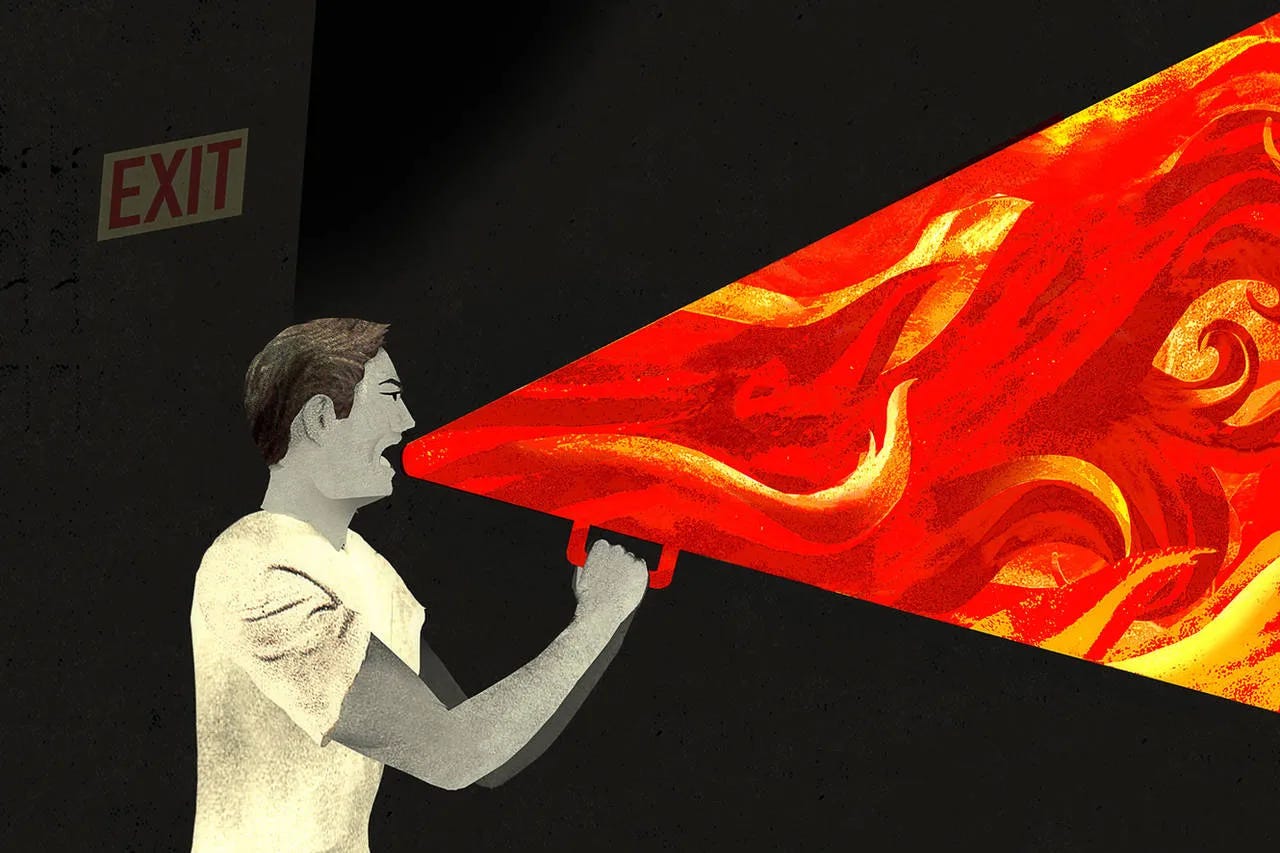
Kemple’s intent is to complain about itchy pants, but the reception by his hearers was to run for their lives. Is Kemple culpable for a mass stampede out of the room? Yes, he should know that shouting ‘fire!’ in a room would have such an effect, even if it wasn’t his intent. Now, he wouldn’t be brought up on legal charges in the US for causing such a scene, but he would be a jerk and the people involved would rightly be angry with him. This helpfully applies to the opening ceremony. Maybe it is the case that the intent of Thomas Jolly and those involved was to describe something to do with Bacchus, the Greek god of wine and revelry. But it was certainly the case that to the vast majority of those watching around the world it was indeed a mockery of Da Vinci’s famous piece, and ultimately of Christianity. As I said to my friend, the average viewer of the opening ceremony wouldn’t have a clue who Bacchus was, but they do know the Lord’s Supper and Da Vinci’s famous portrayal of it. This explains the near-universal outrage: the common interpretation of the event was that it was mocking Christianity. Those involved in Paris should have been aware of this and taken measures to be clear that they were intending it to be about Bacchus, but they did not. Their clarifications and apologies came after the fact, which reasonably leads one to have a level of distrust, giving the appearance of having to do damage control. I prefer to follow Christian charity and will take their apology at face value. But is Jolly (et al) responsible for the offence that was caused? Only if Kemple is responsible for causing a stampede.
I’ll give Dr. Kemple the final word:
It was pretty painfully obvious that the scene in Paris—even if not actually intended to mock—looks alike to Da Vinci's incredibly famous, custom-setting painting. I am certain they rehearsed it. I am certain they viewed that rehearsal from the angle the camera represented.
They could not not know, and they are culpable regardless of their stipulated intent.
...shared his consternation, chided, stupid Christians! ....shared a meme...
Irate? That's a gross over characterization.